
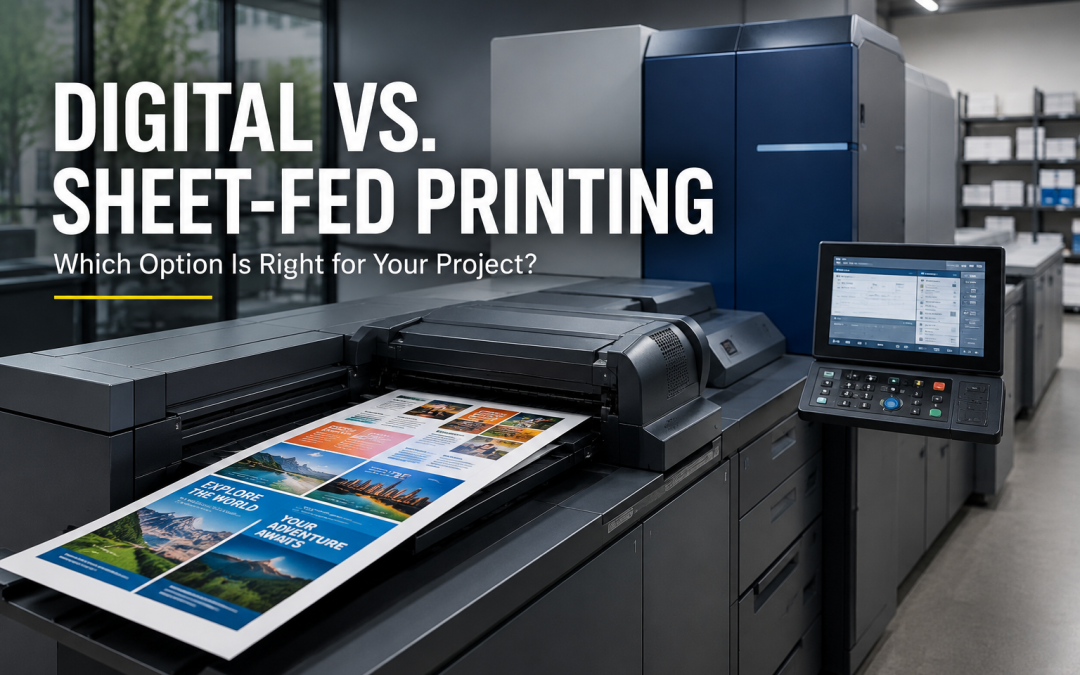
When planning a print project, one of the most common questions is:
Should I use digital printing or sheet-fed offset printing?
The answer depends on your quantity, budget, timeline, and project goals. Both methods produce high-quality printed materials, but each offers unique advantages.
This guide will help you understand the differences and determine which option is best for your next project.
Comparing Digital and Sheet-Fed Printing
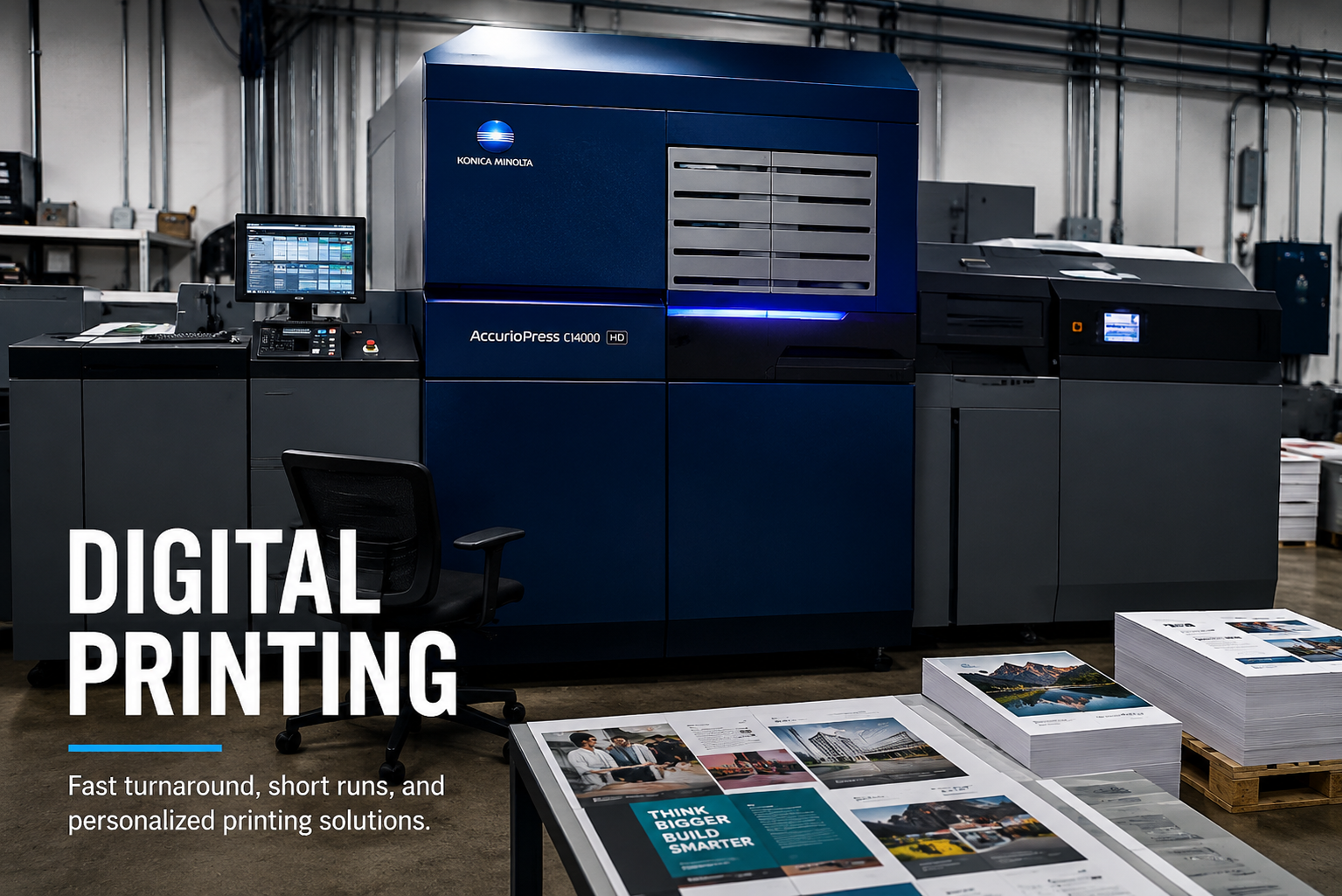
Digital Printing
Digital printing transfers artwork directly from a digital file to the press without the need for printing plates. Because there is minimal setup involved, digital printing is often the fastest and most cost-effective option for smaller quantities.
Fast Turnaround Times
Lower Setup Costs
Ideal for Short Runs
Easy to Personalize
Cost-effective for Small Quantities
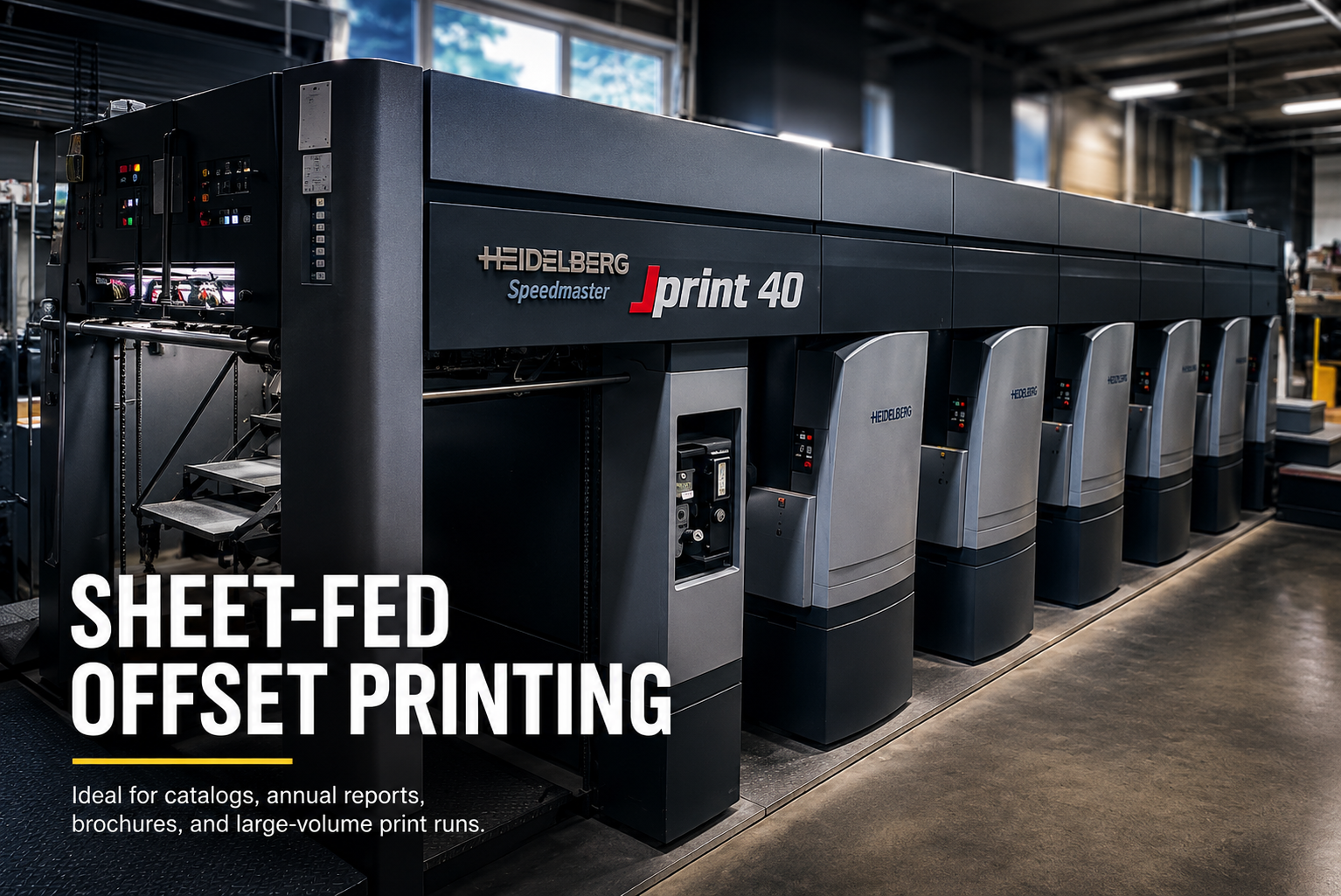
Sheet-Fed Printing
Sheet-fed printing uses metal plates and rubber blankets to transfer ink onto paper. While setup takes longer, sheet-fed printing becomes increasingly economical as quantities increase and offers exceptional color consistency.
Excellent Color Accuracy & Consistency
Lower Cost per Piece on Larger Runs
Wide Range of Paper Choices
Superior for Specialty Finishes
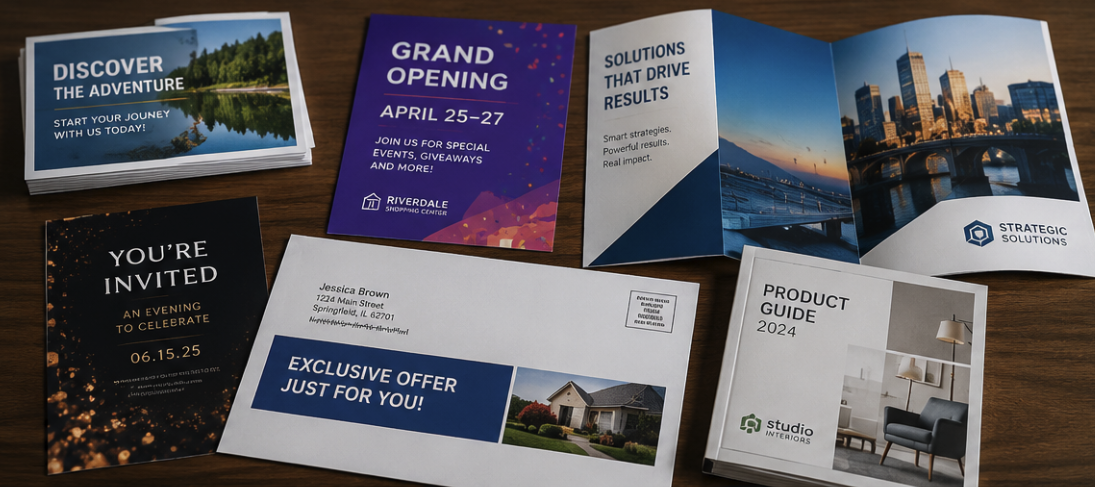
Common Digital Printing Projects
- Flyers
- Postcards
- Short-run Brochures
- Event Materials
- Personalized Direct Mail
- Small Quantity Catalogs
Common Sheet-Fed Projects
- Catalogs
- Annual Reports
- Corporate Brochures
- Direct Mail Campaigns
- Marketing Collateral
- Large-volume Print Runs
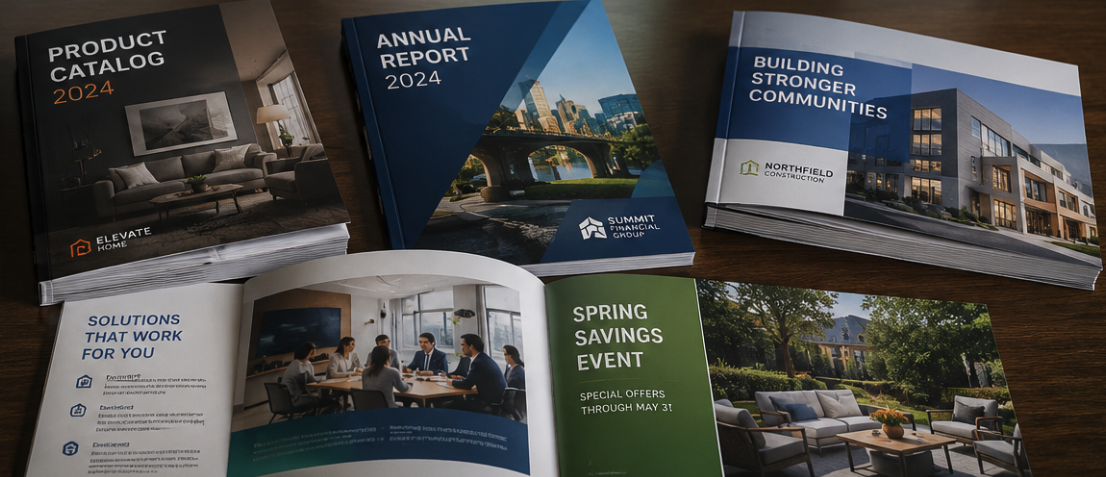
Discover Your Ideal Printing Solution
Ready to bring your project to life? Contact us today for a personalized consultation or quote. Our experts will guide you in choosing the perfect printing method tailored to your needs.